
Women, the Battle for Nigeria’s Political Space
By Daniel Otera
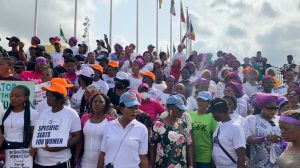
Sarah Jibril first sought the Nigerian presidency in 1992. More than thirty years on, the top of the country’s politics still looks much as it did then, which is to say almost entirely male. Parties are now settling into the 2027 cycle, and the familiar facts have not shifted. No woman has ever been elected governor in any of the 36 states. None has come anywhere near the presidency. And the share of women in elective office has actually been falling from one election to the next.
Start with the numbers, because they tell the story before any argument does. Figures released by the Independent National Electoral Commission in mid September 2026 show women making up about 9.7 per cent of National Assembly candidates and 11.1 per cent of the presidential candidates the commission has tracked over time. What voters actually elect is smaller than what parties field. The Deputy Speaker of the House of Representatives, Benjamin Kalu, has laid it out without dressing it up: women hold just 19 of the 469 seats in the National Assembly, four in the Senate and 15 in the House, and 45 of the 991 seats across the 36 state assemblies. Add it up and women occupy roughly 4 per cent of the seats that matter most.
Nigeria was supposed to be climbing, not sliding. The Inter-Parliamentary Union recorded women holding 7.3 per cent of Senate seats after the 2011 elections. In the current Assembly that has dropped to about 3.7 per cent. Most of the continent has been moving the other way. Nigeria now sits well below the African regional average, which the same body puts above 20 per cent, and a long way behind Rwanda, Senegal and South Africa, where quotas pushed female numbers up sharply within a few cycles.
At the very top the record is even thinner. Jibril ran for president four times, first under the Social Democratic Party in 1992, then twice under the Peoples Democratic Party, and again under the Progressive Action Congress in 2003, when she became the first woman to carry the ticket of a registered party into a presidential race. Her 157,560 votes that year are still the most any woman has ever polled in a Nigerian presidential election. Inside the party primaries, though, the story turns bleak. She won a single vote at the PDP presidential primary in 2011, a result that has since become shorthand for how little the party machinery gave back to women, even those who had stayed loyal for decades.
The women who came after her ran into the same wall. Professor Remi Sonaiya flew the KOWA Party flag in 2015. In 2019, several women made the ballot, among them Oby Ezekwesili of the Allied Congress Party of Nigeria, a former education minister and one time World Bank vice president for Africa, though she pulled out before polling day. Before 2023, Uju Ken-Ohanenye chased the All Progressives Congress ticket and then stepped down for Bola Tinubu at the convention. Read across the cycles and one thing repeats. Women turn up. The gatekeeping that decides who actually carries a serious ticket rarely lets them past.
So what is standing in the way? Money, first of all. Nomination forms in Nigeria are expensive, and in recent cycles the presidential and governorship forms of the big parties have cost tens of millions of naira. For a woman without a line into the deep, mostly male world of political financing, the price tag settles the matter before the campaign has drawn breath. Some parties have waived or trimmed the fees for women here and there, but the gestures have come and gone without denting the outcome.
Then there are the parties themselves, and how they pick candidates. Selection runs through delegate primaries and back room bargaining, and women are scarce among the people doing the bargaining. A female aspirant is asked, in effect, to win over a room she is barely allowed into. Zoning, the arrangement that shares tickets around regions and interests, almost never leaves room for gender in the calculation. So even when women contest primaries in decent numbers, few come out as candidates for seats a party can actually win.
The next set of obstacles is harder to put in a table. Female candidates regularly describe harassment, smear campaigns and outright violence on the trail, on top of cultural and sometimes religious pushback against the idea of a woman wielding executive power. Marriage adds its own tangle. Because of how indigeneity works in practice, a married woman is often treated as an outsider both in the state she was born in and in her husband’s state, which chips away at the local base any serious run depends on.
Governorship, the very office that has produced most of Nigeria’s presidents, has been the toughest ceiling of the lot. Women have served as deputy governors in several states, and a few have stood in briefly as acting governor, but not one has ever won the job outright. In 2023, ten women ran for governor, seven in the South and three in the North, and every one of them lost. For most women in state politics, the deputy governorship has quietly become the ceiling, a seat close to power without being power itself.
The main legislative answer to all this is the Reserved Seats for Women Bill, HB 1349, sponsored by Kalu. It does not take a single seat from any man. Instead it creates new ones that only women can contest. As written, it would add 37 Senate seats, one for each state and the Federal Capital Territory, a matching batch in the House of Representatives, and three reserved seats in each of the 36 state assemblies. That comes to 74 new seats at the federal level and 108 at state level, with a sunset clause that forces a review after 16 years, or four election cycles.
Getting it through has been another matter. The bill passed second reading in the House in July 2024, and the National Assembly signalled it would be voted on with other constitutional amendments in late 2025. That vote never happened. As the 2027 cycle opened, the bill was still hanging, which means Nigerian women head into yet another general election without the reform many had counted on. And even if the National Assembly finally passes it, the last hurdle is the steepest one of all. Any constitutional amendment needs the nod of at least two thirds of the 36 state assemblies, the same chambers where women are hardest to find.
Kalu and other backers frame the bill as a fix rather than a favour, pointing to Kenya and Rwanda, where reserved seats and quotas reshaped female representation inside a few cycles. Critics push back on two fronts, worried about swelling an already costly legislature, and unsure whether reserved seats confer real clout or simply build a second, lesser class of lawmaker. Both arguments will be waiting whenever the bill comes back to the floor.
For 2027, the outlook is written into what has not moved. The forms are still dear, the primaries still male, the reserved seats bill still unpassed. A handful of women have already declared presidential ambitions for the cycle, keeping alive a line that runs all the way back to Jibril, but on the machinery as it stands, the odds at the very top are long. Whether the next ten years look any different will turn less on the nerve of individual women, which the history shows has never been the missing ingredient, and more on whether the country ever changes the rules that decide who gets to be on the ballot in the first place.